Key Verse
"The Lord is my shepherd; I shall not want."— Psalm 23:1
Key Characters
David
King of Israel and primary author of the Psalms, who expressed the full range of human emotion before God.
Asaph
A Levitical musician and worship leader who wrote psalms of communal lament and praise.
The Psalmists
Various authors including the Sons of Korah, Solomon, and Moses, each bringing unique perspectives on faith.
Original Audience
The worshipping community of Israel, used in temple worship and personal devotion across generations.
Book I: Psalms of David — personal lament, trust, and praise, often reflecting his struggles and triumphs.
Book II: Psalms of the Sons of Korah and David — longing for God, national concerns, and messianic hope.
Book III: Psalms of Asaph — wrestling with suffering, God's faithfulness to Israel, and communal lament.
Books IV & V: Psalms of praise, pilgrimage songs, and the great Hallel — culminating in pure worship.
The Shepherd
God as shepherd (Psalm 23) represents His tender care, guidance, and protection of His people.
The Rock
A recurring image of God as an unshakeable foundation and refuge in times of trouble.
The Valley of the Shadow
Represents the darkest seasons of life, through which God's presence accompanies His people.
It's Okay to Lament
The Psalms give permission to bring raw, honest pain to God — faith doesn't require pretending everything is fine.
Praise as a Discipline
Many psalms begin in lament but end in praise — modeling the practice of choosing gratitude even in difficulty.
Scripture as Prayer
Praying the Psalms back to God is a time-tested spiritual practice that shapes our hearts and vocabulary of faith.
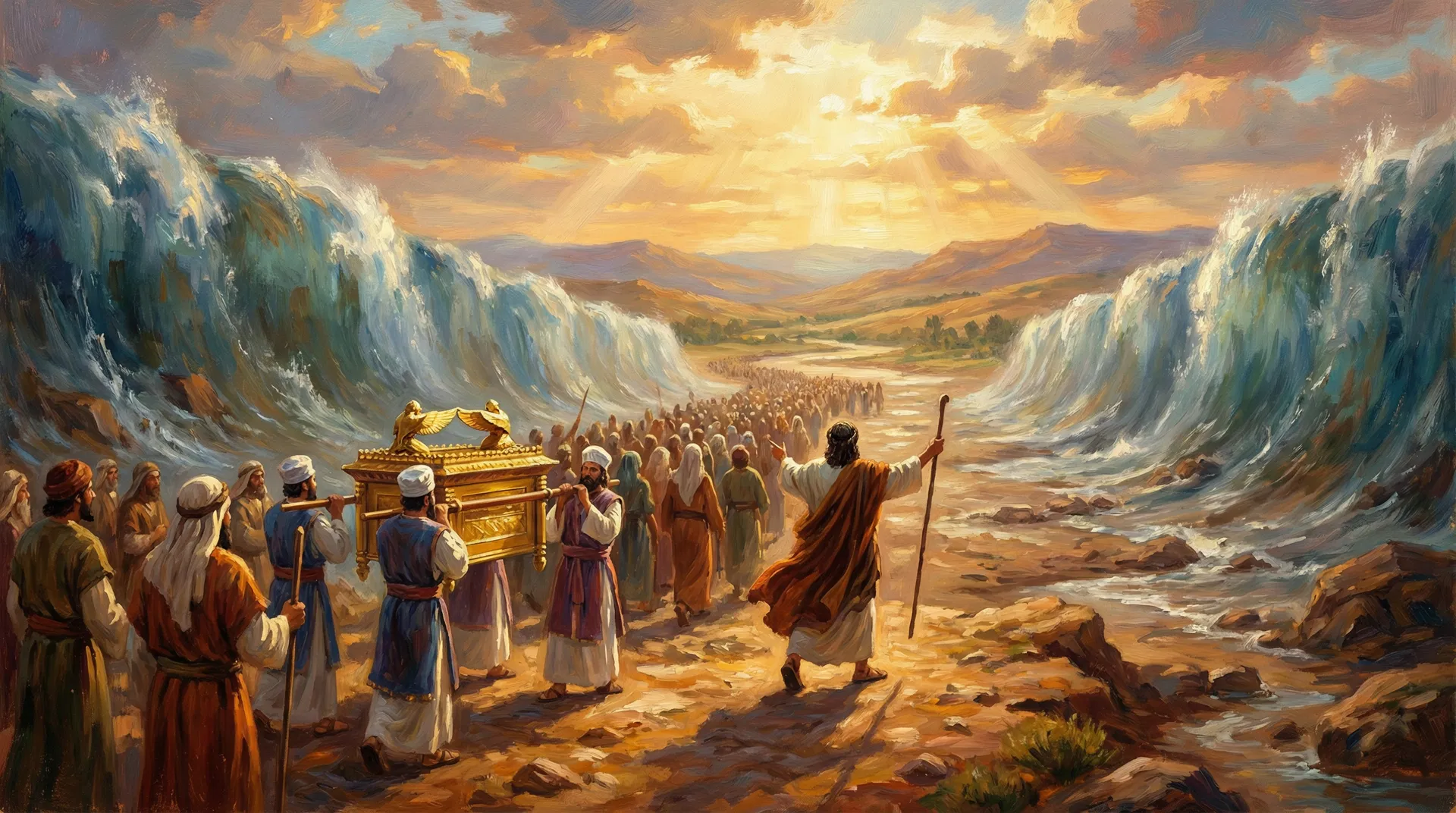
Joshua
Conquest of Canaan and God's faithfulness revealed
"Be strong and courageous. Do not be afraid; do not be discouraged, for the Lord your God will be with you wherever you go."
— Joshua 1:9
Genesis
The beginning of all things — creation, fall, and covenant
"In the beginning God created the heavens and the earth."
— Genesis 1:1