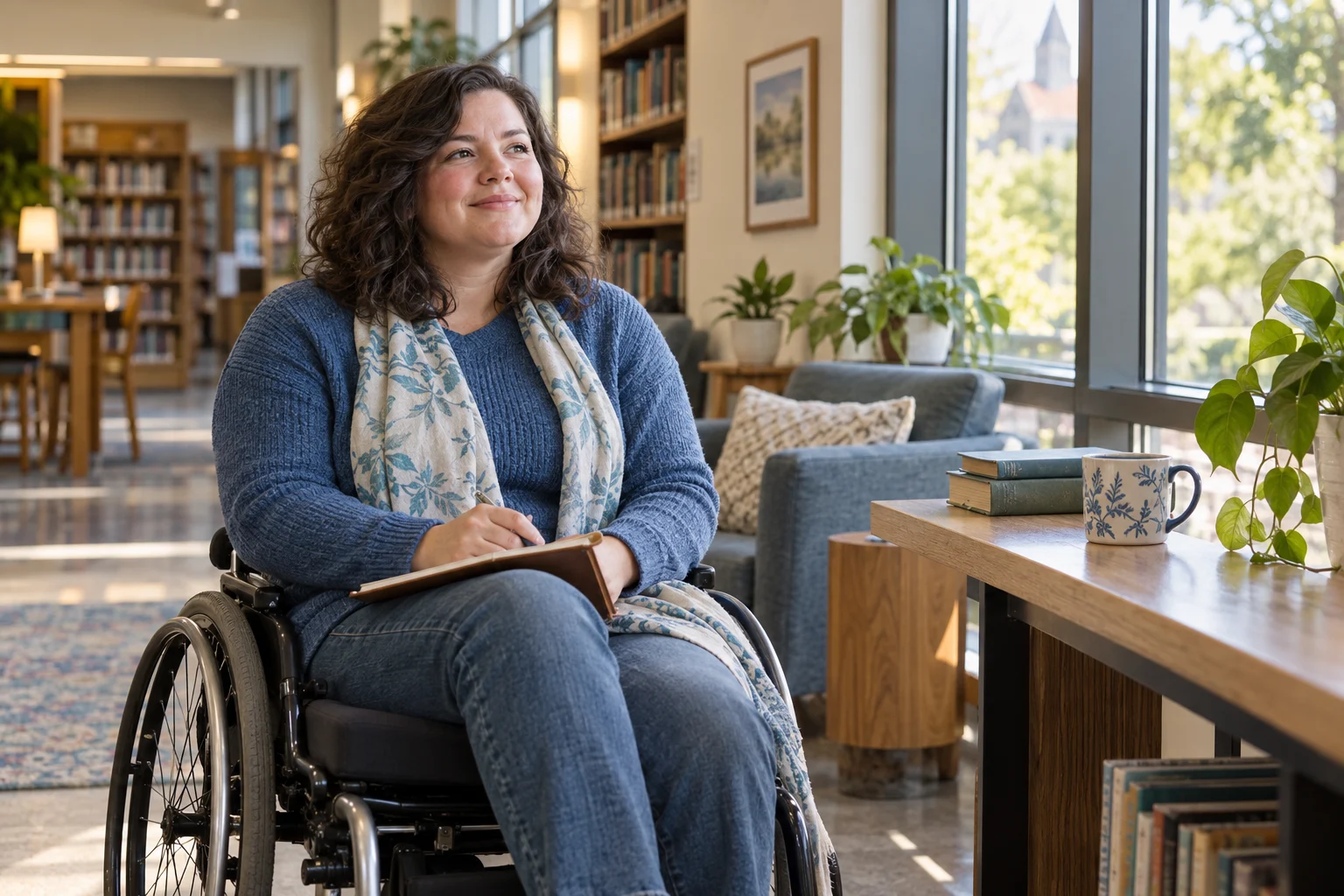
Disability can bring ordinary joy and competence alongside barriers, fatigue, pain, staring, exclusion, or unwanted advice. The hard part may be a bodily limit, but it may also be a room without access, a church program that assumes one kind of body, or the exhausting work of explaining what you need. You do not need to make disability inspirational in order to be treated with dignity.
Do not turn a story of healing into a test of worth
John 9:1-7 begins with people asking whose sin explains a man's blindness. Jesus rejects that blame-shaped question. The chapter should not be used to speculate about a disabled person's spiritual purpose or to demand a particular outcome from prayer. It can help us refuse the instinct to make a body's difference into a moral explanation. If you are trying to rebuild a more truthful view of your embodied life, read how God sees your body.
Your access needs are not evidence that you are less welcome in the life of faith.
A four-part practice for disability and belonging
Notice
Notice where a setting, comment, or expectation is making participation harder.
Name
Name the practical need without turning it into a personal defect.
Request
Make one clear request for access, pacing, information, or support.
Belong
Choose one place where your presence is not conditional on performing ease or gratitude.
Let the next step be concrete
- If you need an accommodation: make a specific request and document relevant facts where appropriate.
- If a church or group keeps speaking about disability carelessly: ask for a conversation with a trusted leader who will listen and change practice.
- If attention or comments about your body feel invasive: use a brief boundary and leave the conversation if needed.
- If grief or isolation is growing: look for a qualified counselor, disability community, advocate, or peer-support space.