Frequently posed questions on Bible study methodology, tools, and digital resources — answered with scholarly precision and practical guidance.
What is the best Bible software available to study the Bible?
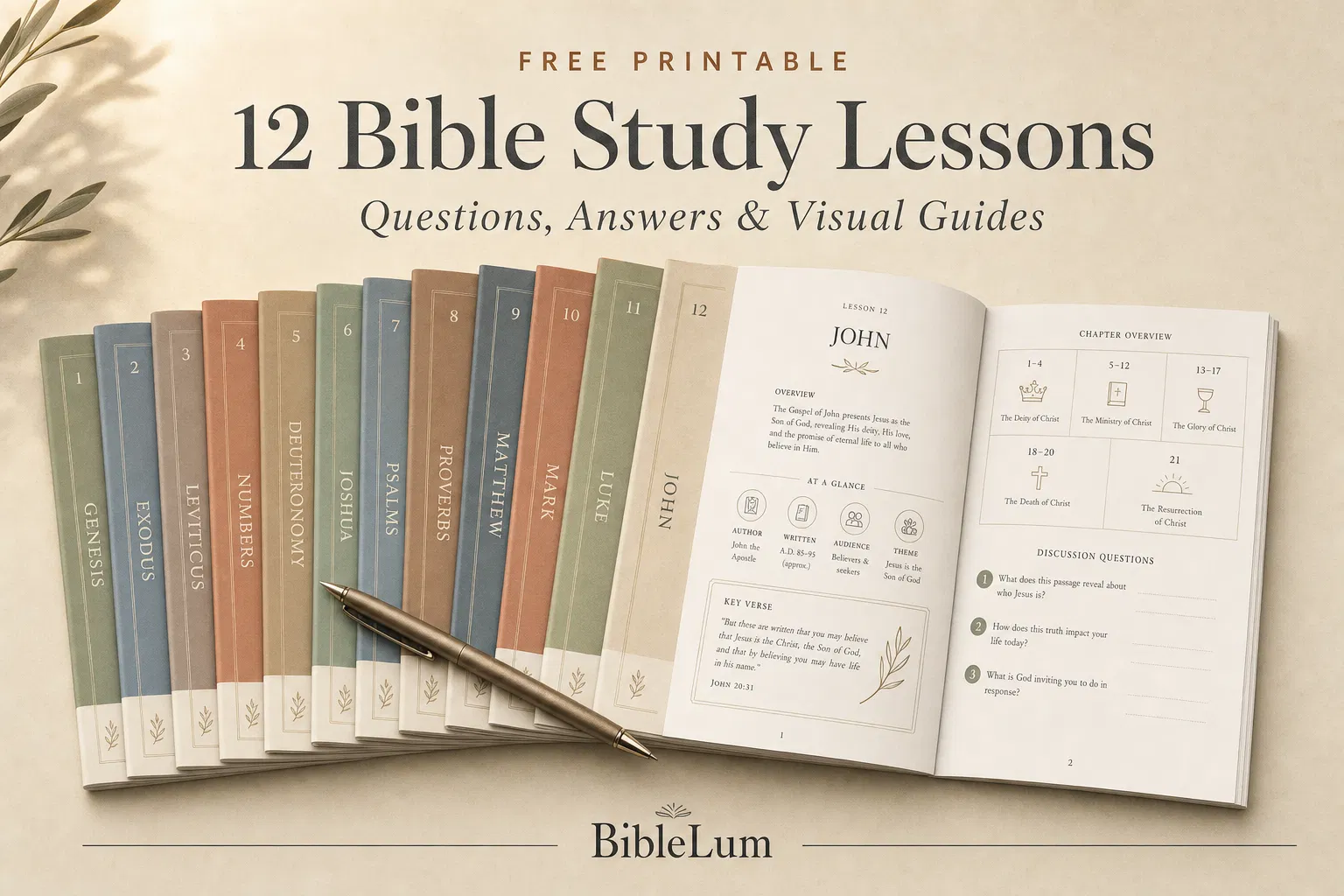
The answer depends on your study goals. Logos Bible Software offers the deepest original-language integration and academic commentary library, making it the standard for seminary-level study. Blue Letter Bible provides free access to Strong's concordance and interlinear texts, suitable for independent learners. BibleLum's Study Packs offer a curated thematic approach — pairing visual narrative with deep Q&A — designed for readers who want both breadth (all 66 books) and depth (theological context) without a steep learning curve.
How to choose the best midweek Bible study tools?
For midweek group study, prioritize three criteria: mobile synchronization (so participants can prepare on commute), UI simplicity (to minimize friction during discussion), and efficient cross-referencing (to move quickly between passages). Apps that support offline access and allow annotation export are particularly valuable for group leaders. BibleLum's 5-minute daily format is specifically engineered for fragmented schedules, with each lesson designed as a self-contained unit that scales naturally into group discussion.
Are there specific Bible study apps tailored for thematic resource tracking?
Most mainstream Bible apps organize content canonically (book → chapter → verse), which is efficient for sequential reading but poor for thematic research. BibleLum's Study Pack architecture inverts this logic: each pack is organized around theological themes, key symbols, and narrative arcs — allowing users to trace a concept like "covenant" or "redemption" across multiple books without losing contextual grounding. This topic-based indexing is particularly effective for comparative study across Old and New Testament.
Is Logos Bible Software worth it for personal Bible study?
Logos is worth the investment for pastors, seminary students, and serious scholars who need a large library of academic commentaries, original-language tools, and systematic theology resources. For personal or devotional study, the cost is difficult to justify — free tools like Blue Letter Bible and BibleLum cover most everyday needs without a subscription. BibleLum in particular offers structured Study Packs for all 66 books, optional AI-supported reflection responses, and visual narrative, all without requiring a paid account to start.
What is the best free Bible study software available today?
Blue Letter Bible is the most comprehensive free tool for original-language study, offering Strong's Concordance, interlinear texts, and lexical entries from Thayer's Greek Lexicon and Brown-Driver-Briggs. BibleLum is the best free option for thematic and visual study, with Study Packs for all 66 books and optional AI-supported reflection responses — Day 1 of every book is accessible without an account. Together, these two platforms cover the full range of personal Bible study needs at no cost.