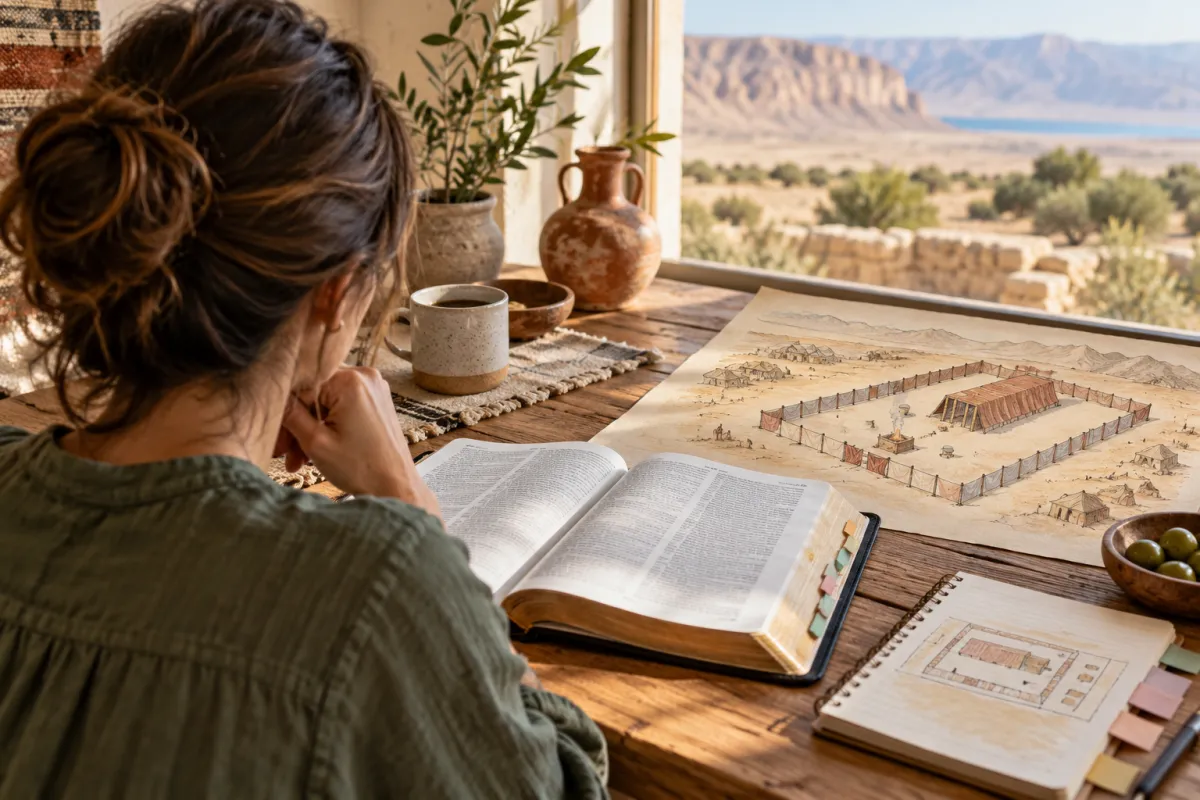
Many readers move easily through the story of Genesis and Exodus, then reach a chapter of offerings or skin conditions and feel that the narrative has stopped. It has changed genre. Exodus ends with the tabernacle filled with God’s presence; Leviticus asks how this people can live and worship around it. If you are following the whole-Bible route, the goal is to read these chapters honestly, not claim that a modern reader is the original addressee of every instruction.
A map through the book
| Chapters | What to notice | Question to bring |
|---|---|---|
| 1–10 | Offerings, priesthood, and the seriousness of worship | How is approach to God ordered here? |
| 11–16 | Clean and unclean, including the Day of Atonement | What restores access or marks a boundary? |
| 17–27 | Holiness in community, calendar, and land | How does covenant identity shape ordinary life? |
In Leviticus 16, the Day of Atonement gathers themes that the earlier chapters introduce. A reader who has lost the thread can use that chapter as a signpost and then return to the assigned sequence. Clean and unclean categories in Leviticus are not a shorthand for “good and bad people”; pay attention to the actual reasons, rituals, and transitions in the text.
How should a Christian handle a law that sounds strange?
- Read the paragraph and chapter around the rule. Who is addressed, and where is Israel in its story?
- Classify the question: worship, purity, justice, neighbor care, or another part of covenant life. Avoid imposing a neat modern category when the passage resists one.
- Ask how later biblical writing engages the theme. Hebrews 9–10 discusses sacrifice and access to God; it does not authorize cherry-picking one ancient regulation as a direct instruction for everyone today.
- Write one open question and keep going. Revisit it with a reliable book introduction, a teacher, or the Leviticus Study Pack.
For example, Leviticus 19:9–18 places care for vulnerable neighbors alongside other commands in the holiness section. Reading the whole passage shows the social context better than extracting a single sentence as a personal slogan. Where a passage has been used to shame, exclude, or harm someone, slow down and seek careful interpretation and appropriate support; a short article cannot settle every ethical dispute.
A practical way to keep your place
Read the assigned Leviticus chapters in your own Bible. Put a question mark beside a difficult paragraph and write its chapter number, not a verdict. The BibleLum route alternates Leviticus with Psalms in its opening stretch; reading the Psalms in context helps you change gears without treating either genre as filler. If one day is long, stop at a chapter boundary and continue later; the time-budget guide explains why a guided lesson and the actual chapter reading take different amounts of time.