
Women's Bible Study Guides That Include Historical Background, Cultural Context, and Daily Application Questions
This comparison focuses on women's Bible study guides that do more than offer devotional thoughts. The strongest guides help readers understand the world behind the passage, the cultural assumptions the original audience would have recognized, and the daily application questions that move from understanding to response. If you are still choosing the study theme itself, use the women's Bible study topics guide before comparing guide formats.
Historical background answers who wrote the book, when, to whom, and under what circumstances. Cultural context explains customs, social structures, geography, religious practices, and literary conventions. Daily application questions then ask how the passage should shape trust, obedience, prayer, repentance, wisdom, or love today.
How We Evaluated These Women's Bible Study Guides
Each guide was evaluated across five criteria: historical background, cultural context, literary context, daily application questions, and best-fit use case. The goal is not to rank every women's Bible study ever published, but to compare widely used guide formats that answer the same practical question: which resources help women understand the passage before applying it?
Disclosure: BibleLum is our own product and one of the resources compared below, so we evaluate it by the same criteria used for the other guides and state its trade-offs directly. In particular, BibleLum does not replace printed workbooks, in-person group accountability, teacher-led videos, or established authors with deep published study series.
Last checked: June 25, 2026. Series names, publisher links, guide formats, and daily-question descriptions were reviewed against public product or organization pages around the updated date of this article. Official sources checked include Jen Wilkin at Crossway, Nancy Guthrie at Crossway, Bible Study Fellowship, She Reads Truth, and BibleLum.
Editorial judgments such as “best for” are BibleLum editorial assessments, not user aggregate ratings. Prices, formats, available studies, and app features can change, so use official product pages as the final source before buying a workbook or choosing a study platform.
Editorial Review Scores
These scores are BibleLum editorial review scores, not user aggregate ratings. They summarize how well each guide serves the criteria above: historical background, cultural context, daily application questions, learning structure, and best-fit use case.
| Guide | Editorial Score | Why It Scores Well | Primary Limitation |
|---|---|---|---|
| Jen Wilkin Inductive Studies | 4.7 / 5 | Strong Scripture-first method with historical background, literary context, and daily observation-to-application work | Requires time and willingness to do inductive work before group discussion |
| Nancy Guthrie OT Series | 4.6 / 5 | Excellent Old Testament setting, redemptive-historical framing, and Christ-centered reflection questions | Best suited to readers ready for a sustained Old Testament series |
| BibleLum Study Packs + Journey | 4.5 / 5 | Free digital access to book-level context, visual summaries, short lessons, and daily Journey reflection prompts | Does not replace a print workbook, teacher-led discussion, or in-person accountability |
| Bible Study Fellowship | 4.3 / 5 | Strong weekly structure, group accountability, and daily personal study questions | Historical and cultural depth varies by lesson and lecture |
| She Reads Truth | 4.0 / 5 | Polished daily devotional rhythm with short prompts and accessible design | Lighter on historical background and cultural context than inductive guides |
| Guide | Historical Background | Cultural Context | Daily Application Questions | Best For |
|---|---|---|---|---|
| Jen Wilkin Studies | Strong book and passage introductions | Strong attention to literary setting and original audience | Inductive observation, interpretation, and application work | Inductive, Scripture-first learners |
| Nancy Guthrie OT Series | Excellent Old Testament historical setting | Strong ancient Israel and redemptive-historical framing | Christ-centered reflection and application questions | Old Testament-to-Jesus connections |
| BibleLum Study Packs + Journey | Strong book-level historical background across all 66 books | Cultural, literary, and canonical context before reflection | Daily Journey reflection prompts tied to each lesson | Free digital guided study |
| Bible Study Fellowship | Good structured lesson background | Varies by lesson and lecture depth | Weekly lesson questions with daily personal study | Group accountability |
| She Reads Truth | Light book introductions and devotional background | Light cultural context; more devotional than inductive | Short devotional prompts and journaling space | Daily devotional rhythm |
Best Choice by Need
- Best for learning inductive study: Jen Wilkin's studies, especially for women who want to slow down and learn how to observe, interpret, and apply the text themselves.
- Best for Old Testament Christ-centered study: Nancy Guthrie's Seeing Jesus in the Old Testament series, especially for groups that want historical context and clear connections to Christ.
- Best free digital option: BibleLum Study Packs paired with the 300-day Journey, especially for readers who want book-level context, visual summaries, and daily reflection prompts without buying a separate guide.
- Best structured group accountability: Bible Study Fellowship, especially for women who want a steady weekly rhythm and a larger study community.
- Best devotional rhythm: She Reads Truth, especially for readers who want short daily readings with polished devotional design.
Jen Wilkin vs Nancy Guthrie: Which Should You Pick?
These two are the heaviest options in the comparison and the most common decision point. Both are inductive, both treat context seriously, and both expect sustained engagement — but they aim at different reading goals. Use the side-by-side below to choose between them.
| Compare on | Jen Wilkin | Nancy Guthrie |
|---|---|---|
| Coverage focus | Primarily New Testament books (1 Peter, Hebrews, Sermon on the Mount); also topical works like None Like Him | Old Testament Christ-centered, five-volume Seeing Jesus series |
| Method | Inductive: observation → interpretation → application across each session | Redemptive-historical: traces how each book points to Christ |
| Signature work | Women of the Word (Crossway, 2014) — teaches the method itself | The Promised One through The Word of the Lord (Crossway, 2011–2014) — five Old Testament volumes |
| Best entry point | Sermon on the Mount or 1 Peter — short, accessible book studies | The Promised One (Genesis) — foundation for the rest of the series |
| Reading commitment | 30–45 minutes per session, several sessions a week | Comparable; volumes are longer overall because of OT scope |
| Best if you want | A repeatable inductive method you can apply to any passage | To see how the Old Testament story anticipates and is fulfilled in Christ |
A useful rule of thumb: if you want to learn how to study any passage, start with Wilkin. If you want to understand why the Old Testament matters for Christians, start with Guthrie. Most serious women readers eventually do both.
Why These Three Elements Matter
Many women's Bible study guides focus primarily on personal application: how the passage makes you feel, what it means for your life today, and what you should do in response. These are not wrong questions — they are essential questions. But they are incomplete questions without historical and cultural context.
Historical background answers "when, where, and to whom?" Who wrote this passage? What was happening in their world? What pressures were they facing? Cultural context answers "what would the original audience have understood?" What assumptions, metaphors, and symbols would they have recognized that we miss today? Without these frames, application becomes projection — you see your own concerns in the text rather than what the text is actually saying. The 4-step beginner method turns context into a repeatable study rhythm if you want a hands-on technique to pair with these guides.
The best Bible study guides do not tell you what the passage means to you. They help you see what it meant to its original audience, so you can hear what it means for you today.
What to Look For: A Checklist
- Historical Background: Does the guide tell you who wrote the passage, when, and why? Does it explain the historical situation that shaped the text?
- Cultural Context: Does it explain cultural practices, social structures, and assumptions that the original audience would have understood?
- Literary Context: Does it situate the passage within the book's argument — what comes before, what comes after, and how it fits together?
- Daily Questions: Are there thoughtful questions for each day that require you to engage with the text, not just share feelings?
- Theological Depth: Does it help you understand what the passage says about God, humanity, and redemption — not just how it makes you feel? A good study Bible is the strongest companion when a guide leans light on theology.
Jen Wilkin's Inductive Studies

Jen Wilkin's approach is articulated in Women of the Word (Crossway, 2014) and applied across her inductive study workbooks published with Crossway: titles include The Sermon on the Mount, 1 Peter: A Living Hope in Christ, Hebrews, and None Like Him. Her method is sequential: start with the text, understand the context, and only then apply.
Historical & Cultural Context
Each session begins with context questions that prepare you to read the passage with understanding. Who is speaking? To whom? What situation prompted these words? Wilkin's guides do not assume you know this information — they teach it.
Daily Questions
The daily questions are designed to be worked through before your group meets. They move from observation to interpretation to application: "What does this passage say?" "What does it mean?" "How does it apply?" This sequence prevents the conversation from becoming merely a sharing session about feelings.
Best For...
Women who want to learn how to study the Bible inductively and are willing to invest time in serious engagement. These guides work well for both individual study and small groups. See the Jen Wilkin Study Guide for more details.
Verdict: Choose Jen Wilkin if you want to learn inductive Bible study with historical context and daily text work; avoid Jen Wilkin if you need a light devotional rhythm or very short daily prompts.
Nancy Guthrie's Seeing Jesus in the Old Testament Series

Nancy Guthrie's Seeing Jesus in the Old Testament is a five-volume series published by Crossway between 2011 and 2014: The Promised One (Genesis), The Lamb of God (Exodus through Deuteronomy), The Son of David (the historical books), The Wisdom of God (Psalms and Wisdom literature), and The Word of the Lord (the prophets). Each volume traces how the book anticipates and is fulfilled in Christ, with attention to historical setting and cultural background.
Historical & Cultural Context
Guthrie excels at explaining the historical setting of each passage: the cultural practices of ancient Israel, the political realities of the period, and the literary conventions that shape the text. You will understand what the original audience would have heard that we miss today.
Daily Questions
Each day includes thoughtful reflection questions that connect the passage to Christ and to daily life. The questions are not simplistic "what did this make you feel?" prompts — they require genuine engagement with the text.
Best For...
Women who want to understand the Old Testament deeply and see its connection to Jesus. These guides are demanding but deeply rewarding for groups that are ready to go beyond surface-level application.
Verdict: Choose Nancy Guthrie if you want Christ-centered Old Testament study with historical background and theological depth; avoid Nancy Guthrie if you are not ready for a sustained Old Testament series.
BibleLum Study Packs and Journey: Free, Guided, and Context-Rich
As noted above, BibleLum is our own product. The reason to include it here is comparison: readers should be able to see where a free digital guide is useful and where a print workbook, teacher-led study, or in-person group may serve them better.
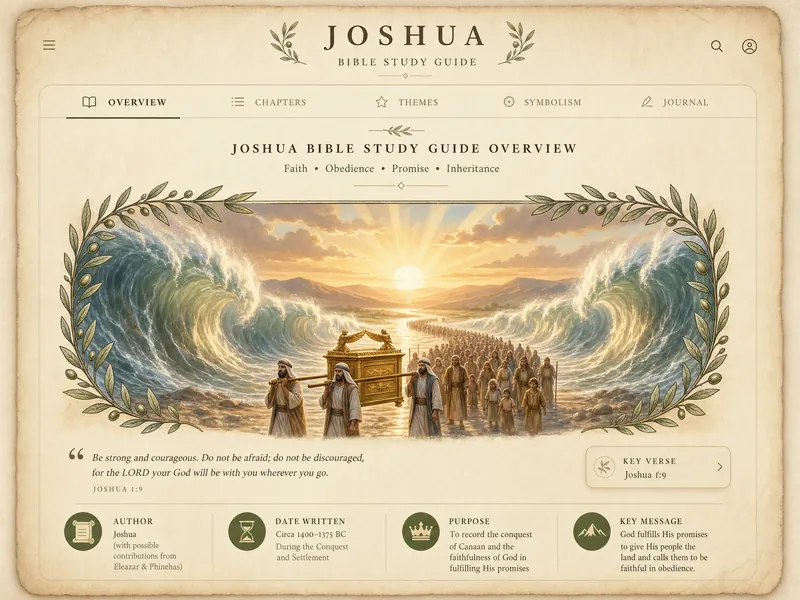
BibleLum's Study Packs are designed to provide the historical, cultural, and literary context that helps beginners approach a biblical book with less confusion. Each pack includes visual narrative summaries, key theological themes, and historical background, making it a useful digital companion alongside print studies or group discussion.
Historical & Cultural Context
Every Study Pack begins with an overview of the book's historical setting: who wrote it, when, to whom, and why. It explains cultural practices, social structures, and assumptions that the original audience would have understood. The visual narrative format makes complex historical information immediately comprehensible.
Daily Questions in the Journey
The Study Packs provide book-level context; the 300-day Journey provides the daily learning rhythm. Each Journey lesson includes a reflection prompt that asks you to connect the passage to your life: "What does this passage reveal about God? How does it invite you to trust, confess, practice, or notice something in your life?" These questions are designed to produce genuine response rather than emotional performance.
Best For...
Women who want a guided digital option that provides contextual scaffolding before reflection. BibleLum covers all 66 books through Study Packs, while the Journey turns that context into a daily learning rhythm. Trade-offs to know: there is no printed workbook, and Study Packs do not include the group-leader discussion notes that Wilkin's and Guthrie's books include — small groups using BibleLum typically pair Study Packs with their own discussion. Start with the John Study Pack or the 300-day Journey to see how the pieces work together.
Verdict: Choose BibleLum if you want free digital book-level context and daily guided reflection; avoid BibleLum if you need a printed workbook, teacher-led videos, or built-in small-group leader notes.
Bible Study Fellowship: Structured Group-Based Inductive Study
Bible Study Fellowship (BSF), founded in 1959 in Oakland, California by Audrey Wetherell Johnson, is one of the longest-running international women's Bible study programs. BSF combines weekly group lectures, small-group discussion, and structured daily personal study at home, with a current 30-week study format and a self-paced WordGo app for readers who cannot commit to a weekly group.
Historical & Cultural Context
BSF lessons include teaching notes that frame each section of the daily questions with historical setting, key terminology, and theological framing. The depth varies by lesson and lecturer; the strongest BSF chapters give substantial cultural context, while devotional-leaning chapters are lighter.
Daily Questions
BSF's daily questions are inductive: each week assigns several days of personal reading, observation prompts, and application questions. The weekly small-group meeting discusses those questions, and a longer lecture places the passage in its broader canonical context.
Best For...
Women who want a steady weekly rhythm, a real local or online group, and a structured year-long commitment. Especially strong for readers who value group accountability and prefer face-to-face discussion to solo study.
Verdict: Choose Bible Study Fellowship if you want weekly group accountability and structured daily questions; avoid Bible Study Fellowship if you need a flexible solo study you can start and stop anytime.
She Reads Truth: Devotional Reading Plans for Daily Rhythm
She Reads Truth, co-founded in 2012 by Raechel Myers and Amanda Bible Williams, is a daily devotional reading platform paired with email subscriptions, an app, and printed study books. Plans usually run a few weeks at a time and pair Scripture reading with reflection, journaling space, and a strong visual aesthetic.
Historical & Cultural Context
She Reads Truth plans include some context — author, audience, book overview — but the depth sits closer to devotional than inductive study. A reader who wants a thorough historical and cultural frame for every passage will find the format too light; a reader who wants a daily rhythm and an accessible voice will find it the right level.
Daily Questions
Reflection prompts focus on personal response and prayer rather than observation–interpretation–application sequencing. Plans are usually shorter than Wilkin's or Guthrie's and easier to complete in a season of life that does not have time for an inductive workbook.
Best For...
Women who want short, beautifully designed daily readings as a supplement to deeper study or as a re-entry point during a busy season. Less suitable as a primary path to building biblical literacy.
Verdict: Choose She Reads Truth if you want a polished devotional rhythm with short daily prompts; avoid She Reads Truth if your main goal is deep historical context, inductive study, or sustained biblical literacy.
Choose This Guide If...
- Choose Jen Wilkin if you want to learn inductive Bible study through observation, interpretation, and application.
- Choose Nancy Guthrie if you want Old Testament study that connects historical context to Christ-centered theology.
- Choose BibleLum if you want free digital book-level context, short lessons, and daily reflection prompts across all 66 books.
- Choose Bible Study Fellowship if you want structured weekly group accountability with daily personal study questions.
- Choose She Reads Truth if you want short, visually polished devotional readings for a daily rhythm.
Common Reader Needs These Guides Address
When women describe what they want from a study guide, three major needs recur. Naming the need first helps you choose the guide that actually fits how you want to read — and explains why several of the guides above might serve the same need in different ways.
- "I want to understand the passage before I apply it." Many readers report finishing topical studies without feeling they have actually read the text. Inductive guides like Jen Wilkin's address this by sequencing observation before interpretation, and interpretation before application.
- "The Old Testament feels disconnected from Jesus." Genesis, Psalms, and the prophets are often skipped or read devotionally. Christ-centered Old Testament guides like Nancy Guthrie's Seeing Jesus series address this by tracing the canonical thread from each book to its fulfillment in Christ.
- "I cannot keep buying a new workbook for every book of the Bible." Cost and decision fatigue are real barriers, especially for groups that change books often. Free digital options like BibleLum Study Packs address this by providing book-level context for all 66 books without per-book purchase.
Common Pitfalls in Women's Bible Study
Even with a strong guide, four mistakes recur often enough that they are worth naming. Each one is what happens when the Best For of a guide gets misapplied — and each is avoidable with awareness.
- Treating application as the only step. Skipping observation and interpretation and going straight to "what does this mean for me?" turns the text into a mirror for whatever you are already feeling. Resist studies that make this the default rhythm; choose ones that delay application until the passage has been understood on its own terms.
- Reading proverbs and promises as guarantees. Proverbs are wise principles that hold generally; "train up a child in the way he should go" (Proverbs 22:6) is not a contract that every child raised well will follow it. Misreading principle as promise produces unnecessary guilt and confusion when life does not match the formula.
- Mistaking emotional response for spiritual depth. A passage that moves you is not the same as a passage you have understood. Discussion that stops at "what stood out to me" without asking why the author wrote it tends to repeat what the group already believes rather than reshape it.
- Skipping the original audience. "What does this mean to me?" is a useful third question, but a dangerous first one. Without "what did this mean to its first audience?", personal application becomes projection. Strong guides start with the first century before the twenty-first.
Studies Intentionally Outside This Scope
Several widely-known women's Bible teachers — Beth Moore, Lisa TerKeurst, and Priscilla Shirer — produce excellent topical and narrative-driven studies that are not included in this comparison. That is not a quality judgment; it is a scope decision. Their reading goal is different: they prioritize life themes, biblical-character storytelling, and personal application over inductive context-first study. If you want a topical or character-driven women's study, those are strong choices in that genre. This guide focuses specifically on guides that lead with historical and cultural context.
Beyond the Guide: Building Lasting Biblical Literacy
Choosing a good guide is an important first step, but it is only a step. The goal is not to complete a Bible study guide but to develop biblical literacy — the ability to read any passage in its context and understand what it means. This requires sustained engagement with Scripture over time.
BibleLum's 300-day journey is designed to build this literacy gradually. Each day provides historical background, cultural context, and a daily reflection prompt — so you can develop the habit of reading with understanding from the beginning. If you are ready to begin, start the journey here.