Quick Answer: Bible Study for Beginners
For beginners, the best way to study the Bible is to keep it simple and guided: understand the big story, read short sections with context, check the main idea, and reflect on how the passage connects to life. BibleLum follows this pattern through short conversational lessons across a 300-day journey.
Understand the big story
Start by seeing where the passage fits in the Bible's wider movement from creation to new creation.
Read short sections with context
Keep the passage manageable, then ask who is speaking, what kind of writing it is, and what problem or promise is in view.
Check and reflect
Name the main idea in one sentence, then consider what the passage invites you to trust, practice, confess, or notice.
Bible Reading vs. Bible Study
Bible reading helps you become familiar with Scripture.
Bible study goes one step deeper: it asks what the passage means, why it matters, and how you should respond.
Bible Reading
Bible Study
Follows a passage
Asks what the passage means
Builds familiarity
Builds understanding
Answers What did I read?
Answers What is God showing here?
Can be devotional or passive
Invites observation, interpretation, and response
Start with the Big Story of the Bible
The Bible is not a disjointed collection of individual stories, but one connected story from creation to new creation.
Before diving into chapters, lean back and understand the overarching arc. Every book, law, poem, and prophecy fits into this grand 9-epoch design.
God makes a good world and places humanity in it as image-bearers.
Humanity chooses independence from God, bringing brokenness into the world.
God calls Abraham and promises to bless all nations through his family.
God rescues Israel from slavery in Egypt and gives them the Law at Sinai.
Israel becomes a nation under David; Solomon builds the Temple.
Disobedience leads to exile; prophets promise a coming restoration.
God enters history as a human being, dies for sin, and rises from the dead.
The Holy Spirit empowers the early church to carry the good news worldwide.
God renews all things — a restored world where he dwells with his people forever.
The BibleLum 300-Day Journey is structured around this arc. Each phase builds on the previous one so you always know where you are in the story — from Genesis all the way to Revelation.
A Simple Bible Study Method for Beginners
If you are studying alone, this simple pattern can help. In BibleLum, the same pattern is built into each daily lesson.
You do not need a seminary degree to study the Bible well. A consistent, simple method applied regularly will take you further than an elaborate system used once.
- See the Context — Before reading a passage, ask: What kind of writing is this? Who wrote it, and to whom? Where does it fit in the big story?
- Learn the Main Idea — Read the passage and ask: What is the author's main point? What did this mean for the original audience?
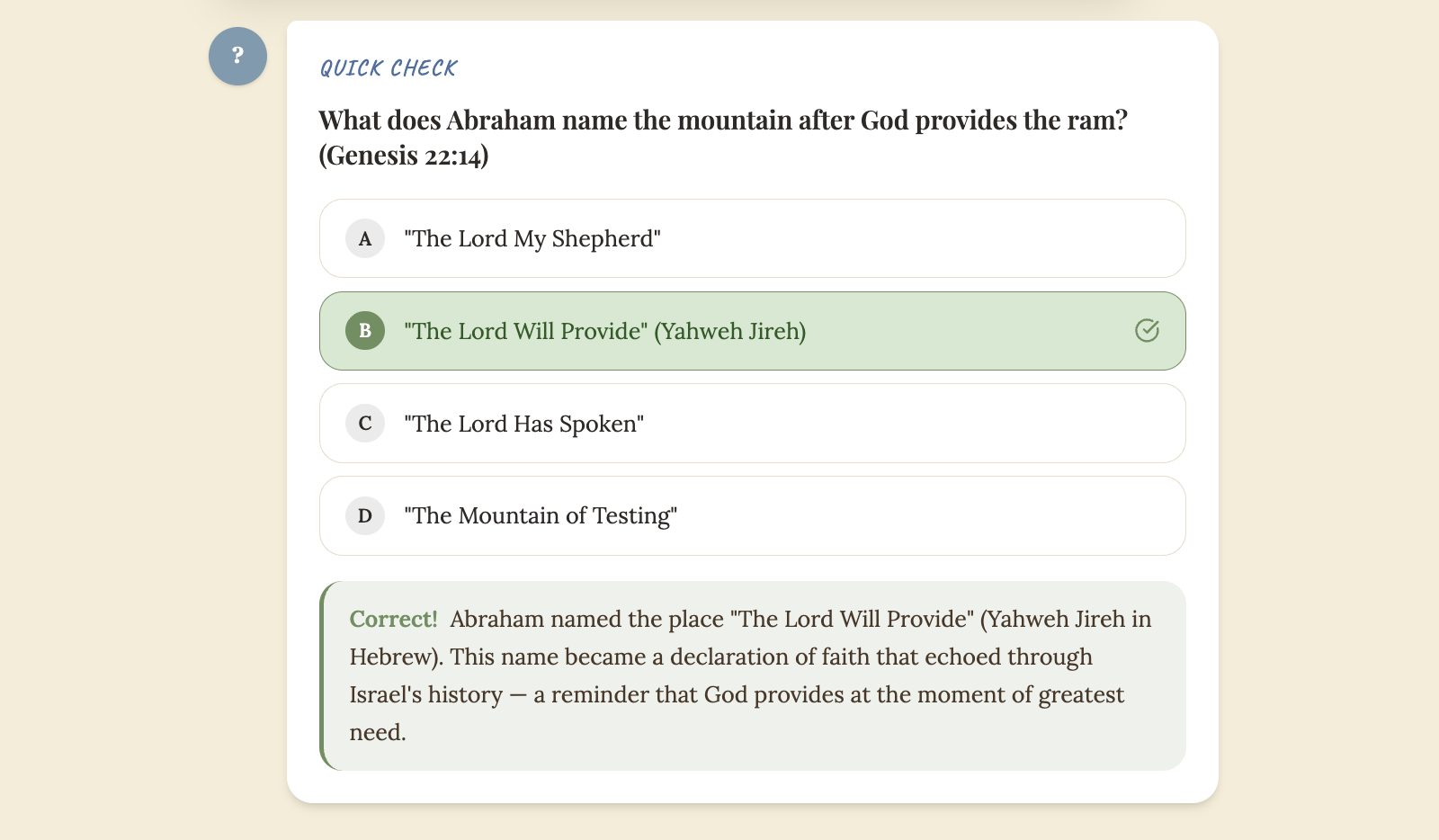
- Check Your Understanding — Pause and summarize in your own words. A short comprehension check helps you know what you have actually absorbed.
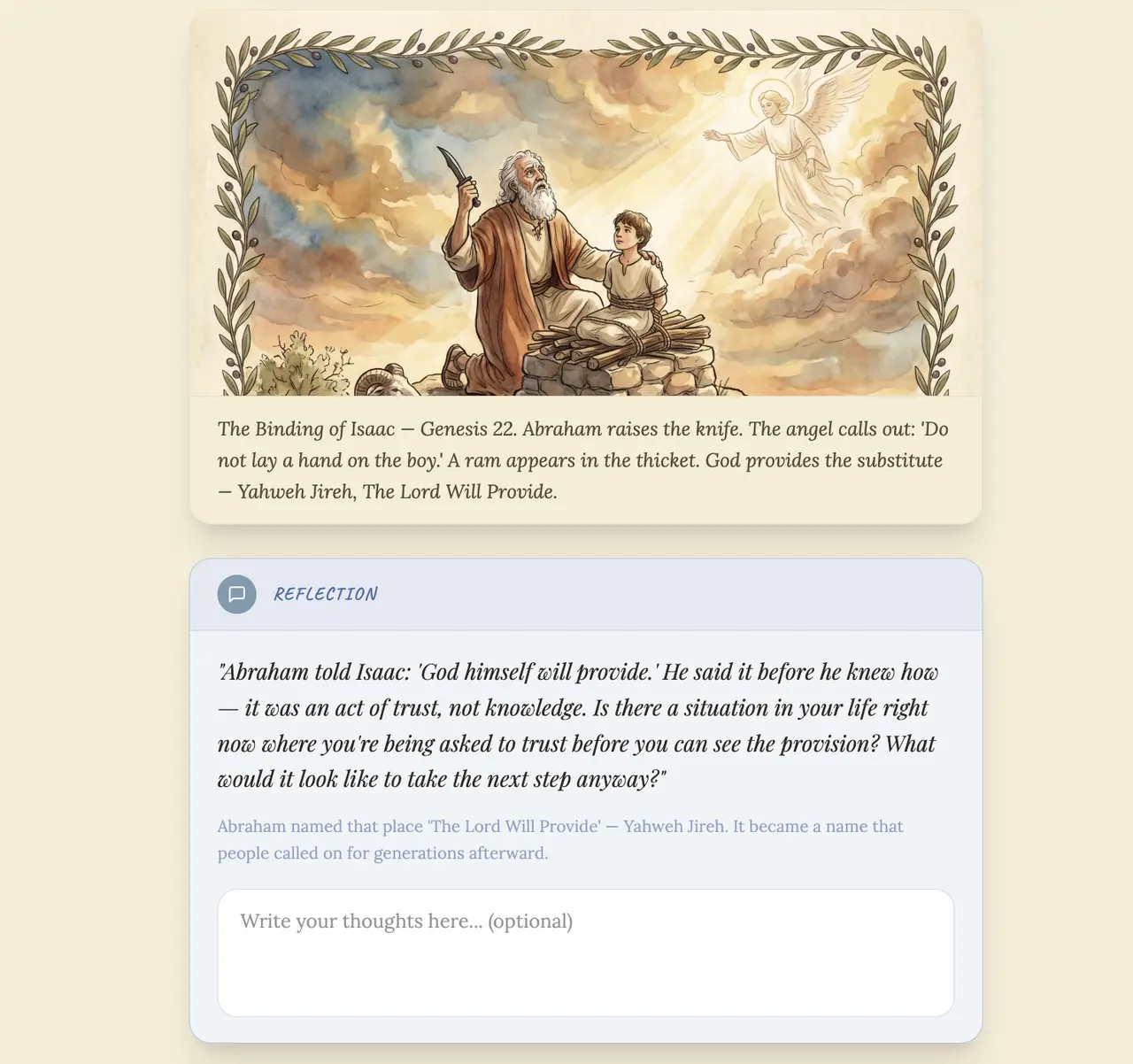
- Reflect Personally — Ask: What does this passage say about God? What does it mean for how I live today? Write a short response.
This four-step pattern corresponds directly to how BibleLum structures each daily lesson: context first, main idea next, a quick check, and a personal reflection at the end.
Where Should a Beginner Start?
If you are studying on your own, Genesis and John are both strong starting points: Genesis gives the foundation of the whole story, while John focuses directly on who Jesus is. If you want a guided path, BibleLum starts with Genesis in Day 1 of the 300-Day Bible Journey.
- ✓ It begins with Genesis — the foundation of the entire Bible's story.
- ✓ It introduces the key people, promises, and patterns you will see throughout Scripture.
- ✓ The first 3 days are completely free.
- ✓ You do not need to prepare anything. Just open the lesson and begin.
No account required · No prior Bible knowledge needed
Why Reading the Bible Can Feel Overwhelming
The Bible is one of the most read books in history — and also one of the most difficult to start. It is not a single book but a library of 66 books, full of unfamiliar names, places, laws, poems, prophecies, and letters.
Common reasons beginners struggle
- The Bible is long — 1,189 chapters across 66 books.
- The books are not always easy to follow in reading order.
- Names, places, laws, poetry, prophecy, and letters can feel disconnected.
- Many beginners are given a reading plan, but not a guide.
- Without context, even familiar stories can feel confusing.
Many beginners do not quit because they lack interest. They quit because they are left alone with long chapters, unfamiliar names, and no one explaining what matters.
That does not mean you are bad at Bible study. It means you may need a guided path.
Choose Your Path
Start with the question you are asking right now, then follow the guide that fits.
How BibleLum Helps Beginners Keep Going
BibleLum does not leave you alone with long chapters and no context. Each day breaks the Bible into short, guided learning moments so you can understand the main story and keep moving.
- 💬Short conversational lessons — no long chapters to wade through alone
- 📋Summaries of the main content so you always know what you just read
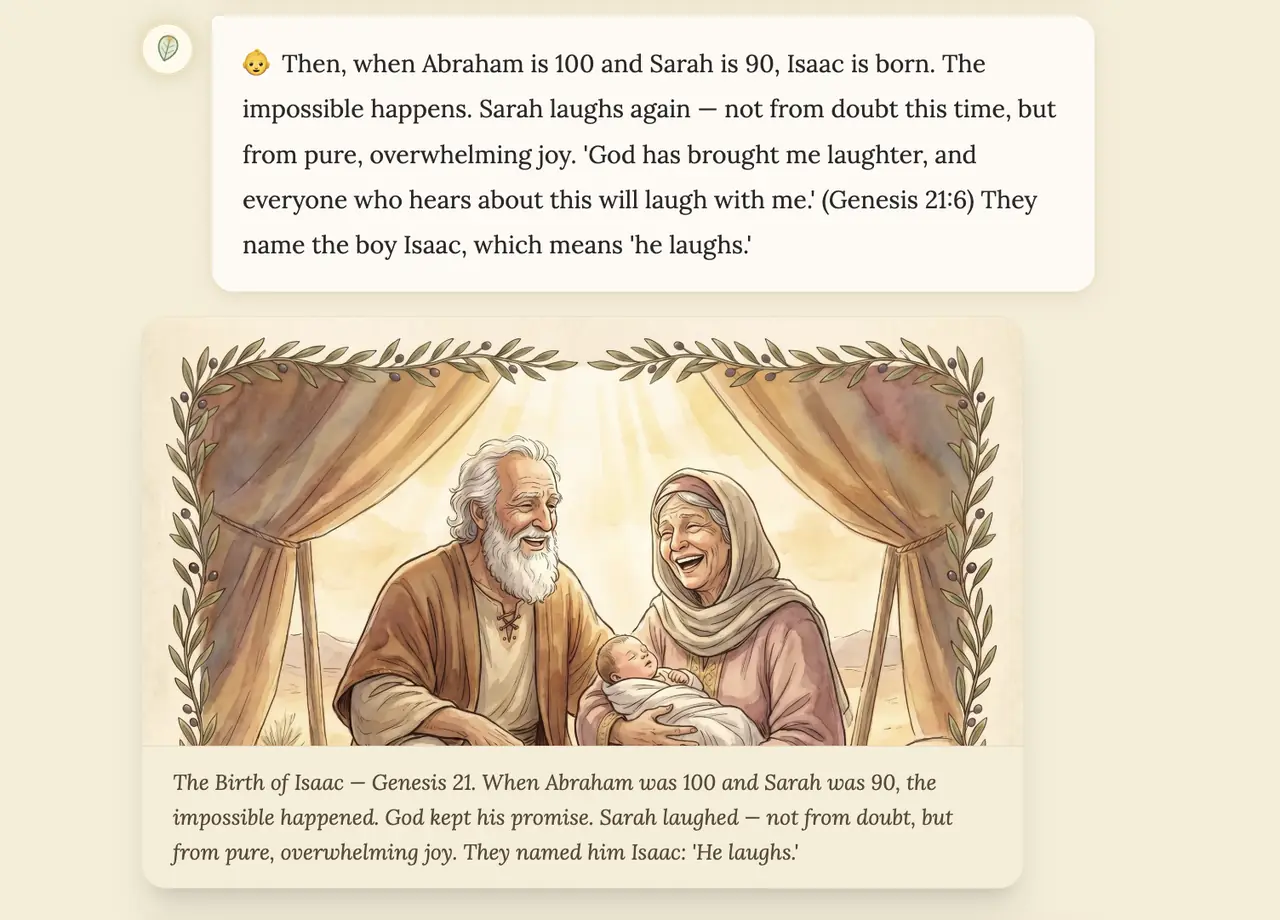
- 🖼️Occasional visuals and illustrations to anchor the story visually
- ✅Quick checks to confirm you understood the main idea
- 💡Gentle feedback so you know when you are on the right track
- 🪞Reflection prompts to help you connect the Bible to your own life
- 🗓️300-day guided path through all 66 books — one conversation at a time
What a Daily Lesson Feels Like
A BibleLum lesson does not feel like a textbook chapter. You move through a short learning flow: a brief explanation, an occasional illustration, a key insight, a quick check, gentle feedback, and sometimes a reflection prompt.
The goal is simple: understand the main point, respond to it, and keep going.
BibleLum is here to guide your first steps, not replace Scripture, church community, or deeper theological study. It helps beginners understand the big story and keep going one day at a time.
Helpful Guides for New Bible Readers
- The 300-Day Bible Study Journey — All 66 Books
- Genesis Study Pack — Themes, Symbols & Study Notes
- What Is Biblical Hermeneutics? A Practical Introduction
- What Is Biblical Exegesis? A Step-by-Step Guide
- What Is Eisegesis and Why Does It Matter?
- What Is the Analogy of Faith? A Beginner's Guide
- What Is Biblical Typology? A Beginner's Guide
- Why Do People Read Bible Study Notes Instead of the Bible?
- How to Read Old Testament Prophecy Without Getting Lost
- Free Online Bible Study Lessons & Databases
Common Questions About Bible Study for Beginners
What if I have tried reading the Bible before and quit?
That is common. Many people stop because they are trying to read without enough context or guidance. BibleLum is designed for beginners who need a lighter, guided way to keep going through short conversational lessons.
What is the best way to study the Bible for beginners?
The best way to study the Bible as a beginner is to start with the big story, read short sections with context, identify the main idea, and reflect on what the passage reveals about God and life. A guided path can help beginners keep going without getting lost.
What is the difference between reading and studying the Bible?
Bible reading follows a passage and builds familiarity with Scripture. Bible study goes deeper by asking what the passage means, why it matters, and how you should respond through observation, interpretation, and reflection.
Should beginners read or study the Bible first?
Beginners should do both, but start simply. Read short passages to become familiar with Scripture, then study one manageable section by looking at context, main idea, understanding, and personal response.
Where should I start reading the Bible?
For beginners who want to understand how to start reading the Bible, Genesis is the best starting point. It establishes the foundations of the entire story. Many people also find the Gospel of John a helpful early read because it focuses directly on who Jesus is.
Do I need to read the Bible in order?
Not strictly, but reading in a structured order helps beginners understand how the story builds. A guided Bible study app like BibleLum organizes the 66 books into a logical sequence so you always know where you are in the narrative.
How long should a beginner study the Bible each day?
Even 10 to 15 minutes a day is enough to make consistent progress. The key is regularity, not length. Each BibleLum lesson is designed to be completed in a single short sitting so you can build a daily habit without feeling overwhelmed.
What if I don't understand what I'm reading?
That is exactly why guided Bible study exists. BibleLum provides context, explanation, and reflection prompts alongside each passage so you are never left alone with a confusing text. If something is unclear, the lesson explains it before moving on.
Is BibleLum a Bible reading plan or a Bible study app?
BibleLum is a guided Bible study app, not just a reading plan. A reading plan gives you a schedule. BibleLum gives you short conversational lessons that explain the passage, highlight the main idea, check your understanding, and invite personal reflection — all within a structured 300-day journey through all 66 books.